
Marketing Field Guides
Quick and painless lessons from an expert in the field to improve your marketing & design IQ.
All Field Guides— from newest to oldest

How To Rebrand Your Business Without Losing the Clients Who Got You Here
Outgrowing your brand doesn't always look like a big, dramatic pivot. Here's how to update it without the people who already trust you feel left behind.

Will ChatGPT Recommend Your Business?
Wondering if ChatGPT would ever recommend your business? I rebuilt a client’s site to find out, and I’m sharing the real numbers here plus tips of what you can try yourself this week.

Marketing Consulting Services: What They Include & Cost
“Marketing consulting services” means something different depending on who's selling it. Here's what it actually includes, what it costs at the tier built for your business, and how to tell if you're ready.

Tighten Your Brand Messaging This Fall
Your logo is fine. So are your colors. It’s the words that have quietly gotten away from you. Here’s how to bring them back into focus before the season gets away from you, too.

Marketing Decision Fatigue is Real — Here's the Framework That Got My Team Through It
I knew nothing about NASCAR when I signed on to executive produce an award-winning documentary about pit crews. Two years and a thousand daily decisions later, I learned something that had nothing to do with racing: you cannot carry marketing decision fatigue alone. Here's the framework that got my team (and me) through it.

Why Your Marketing Isn’t Working (Even Though You're Doing Everything Right)
Sometimes the problem isn't that you're not doing enough. It's that all that doing has nowhere to go. This one's about the plan that stalled, the sales dip that followed, and the honest question behind why is my marketing not working even when you're clearly trying: are you steering, or just staying busy?

The Small Business Guide to Referral Marketing Strategy
Have you ever had that moment when things are running on all cylinders — clients waitlisted, referrals coming in left and right — and then, seemingly overnight, it all dries up? I've been there. The fix isn't a piece of software or a referral platform. It's a real strategy, built into your annual plan, with a goal you set together with the people closest to your clients. Here's how to stop treating your best source of new business as a happy accident.

Surveillance Pricing 101: How Companies Use Your Data to Charge You More
You've experienced it before… the same hotel room or the same flight, somehow a different price than the person sitting right next to you. That's not a glitch. It has a name: surveillance pricing. Here's what it really is, how it shows up in the businesses you shop with every day, and the harder question it raises for the businesses you run.

Marketing for a Long Sales Cycle: Why Patience Is the Strategy
Typical marketing advice treats a long sales cycle as a problem to crush. But when you're asking someone to spend big, the wait isn't a failure of your funnel. It's the honest shape of a real decision. Learn why patience is the strategy, and how to nurture buyers who aren't ready yet without nagging them.

How to Build a Realistic Marketing Plan That Survives Real Life
A capacity-aware marketing plan is a realistic marketing plan built around what you can actually execute. It starts with an honest audit of your time, energy, and predictable interruptions before a single content idea is added to the calendar. The result is a plan with a defined floor (what always happens), a standard pace (what normally happens), and a sprint window (what happens when conditions allow), so marketing continues at some level regardless of what else is going on in the business.

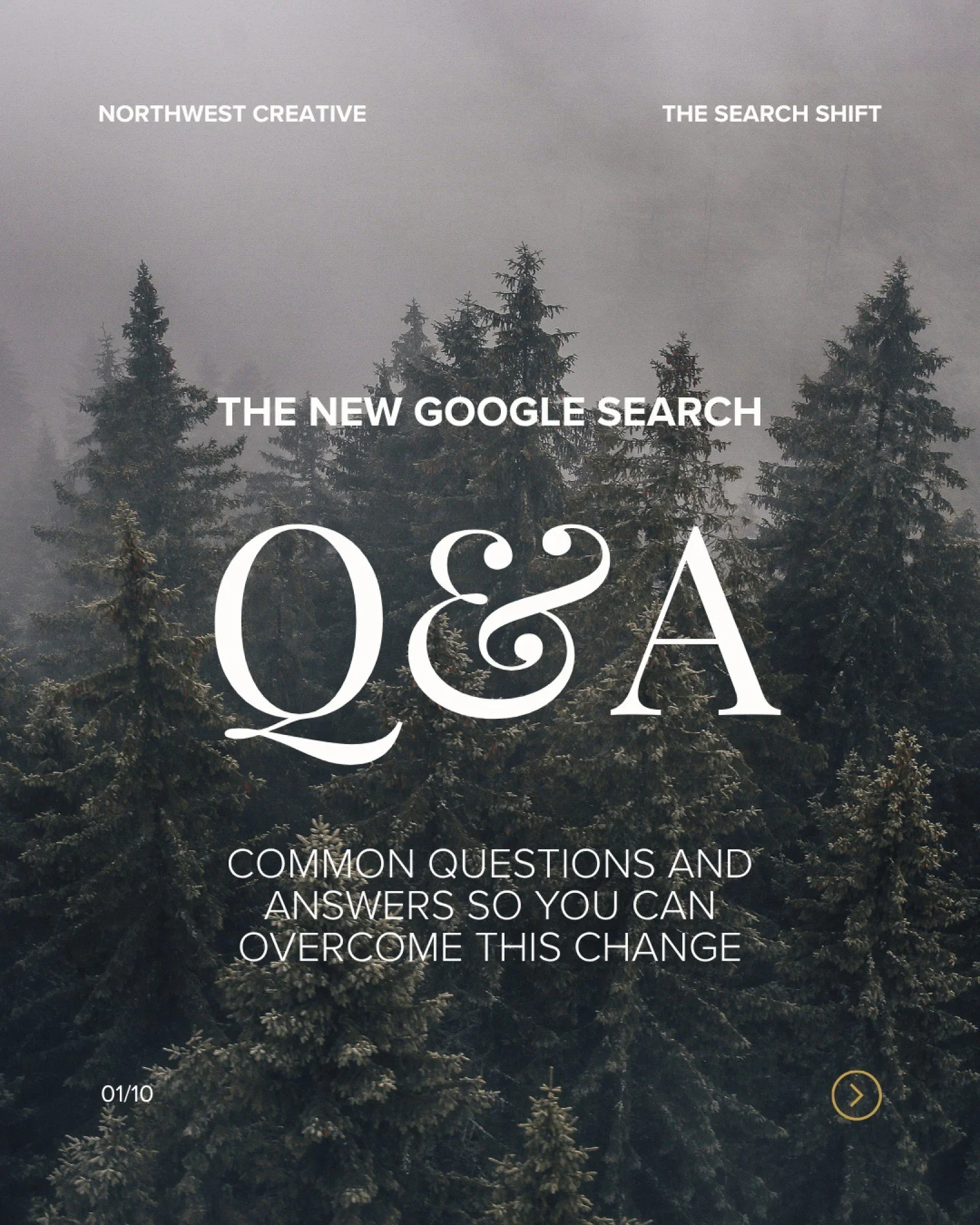
How Google Search is Changing & What Marketers Need to Do in the Next 90 Days
How is Google search changing in 2026?
Google search is changing because of AI Overviews and AI Mode, a redesigned experience that synthesizes answers directly on the results page rather than returning a list of links. To stay visible, marketers should structure content to lead with direct answers, build brand presence across the web through mentions and earned media, and focus on genuine expertise over keyword-optimized content. Ranking on page one still matters, but it no longer guarantees your content will appear in the AI-generated answer your audience sees.

Posting Frequency Isn’t The Move
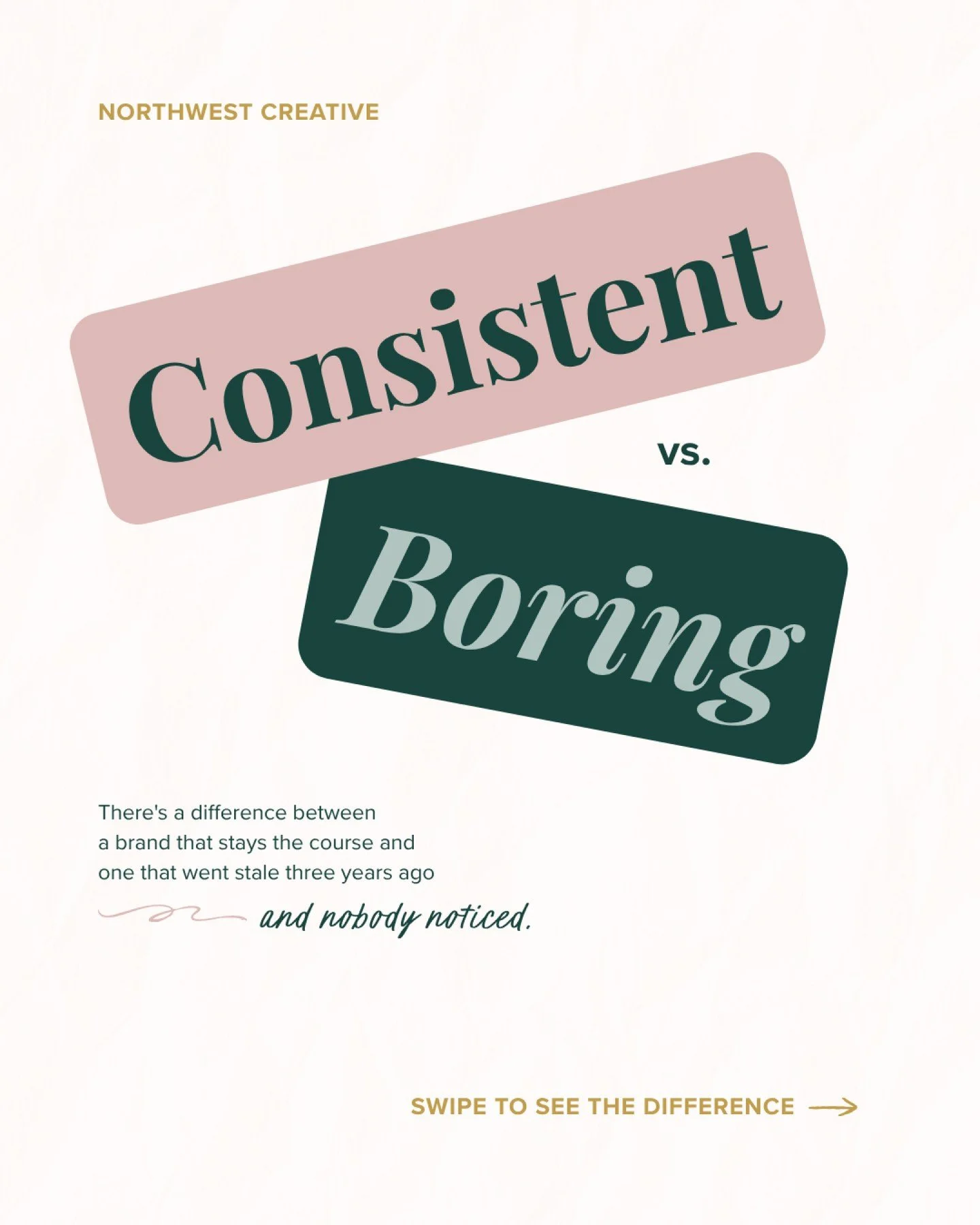
What does consistency in marketing mean?
Consistency in marketing means your audience hears the same core message every time they encounter your brand — across platforms, over time, and regardless of format. It is not a posting schedule. A brand that publishes three times a week with a clear, coherent message will outperform one that posts daily with no discernible throughline. True consistency is message conviction, not content volume.

Brand Design: When To Refresh, Refine, or Leave It Alone
When should you refresh your brand?
A brand refresh is warranted when your business has genuinely evolved but your brand hasn't kept up. Key signs include attracting the wrong clients, feeling disconnected from your own brand when you share it, a shift in your ideal audience over the last two to three years, or a visible gap between the quality of your work and what your visual identity communicates. A refresh is not necessary when you're simply bored with your current look, chasing a competitor's aesthetic, or hoping a new logo will fix a broken offer. Strategic brand refreshes start with a messaging audit — not a mood board.

How Visual Choices Signal Brand Credibility
You don't have to be a designer to make better design decisions. You just have to be willing to look at your brand the way your audience does. Ask whether your visuals reflect where your business actually is today, not where it was when you first launched. Ask whether a stranger could land on your homepage and immediately feel seen, safe, and ready to take the next step. Any gaps are worth closing. It just requires intention.

How to Run Fewer Campaigns with Better Results
A successful marketing campaign focuses on one clear objective, a consistent message, and sustained execution over time. Instead of launching multiple campaigns, businesses should prioritize repetition over novelty, align campaigns with existing momentum, and track performance using meaningful metrics like qualified inquiries and conversion rates. Focused campaigns work best when supported by a strong marketing foundation and clear follow-through.

When Marketing Campaigns Help & When They Hurt
A business should use marketing campaigns when its messaging is clear, audience is defined, and core marketing systems are already working. Campaigns are most effective for supporting specific initiatives, such as product launches, seasonal opportunities, or new market expansion. Rather than fixing foundational issues, campaigns act as accelerators, amplifying what is already working and creating focused momentum over a defined period.

How To Track Attribution & Measure Marketing ROI
Marketing attribution is the process of identifying which marketing efforts contribute to conversions or revenue. It’s difficult because modern buyer journeys are non-linear, involving multiple touch points across channels. Instead of seeking perfect accuracy, businesses should use attribution to identify patterns, understand contribution, and make more informed marketing decisions over time. This Field Guide tells you how.

Marketing Metrics to Measure When Leadership Wants Answers
What marketing metrics should businesses track? The most valuable marketing metrics are those that inform business decisions, not just describe activity. Instead of focusing on decorative metrics like impressions or clicks, companies should track decision-ready metrics tied to business goals. These metrics help leadership understand what marketing is driving growth and what actions to take next.

What Prospects Need to See Before They Reach Out
Buyer confidence is the difference between interest and action. Before prospects reach out, they evaluate trust signals such as clear positioning, transparent process, human proof, and authentic messaging. When brands reduce uncertainty and decision friction, sales conversations become easier and growth becomes more predictable.

How to Choose the Right Support for Sustainable Business Growth
Choosing the right marketing and design partner is a strategic decision that affects clarity, trust, and growth. The best partners lead with strategy, understand business realities, and design marketing systems that serve both the business and its audience.

Lately in the Feed